Compact multipurpose / first-aid shuttle
10.5 × 6.2 × 3.6 m
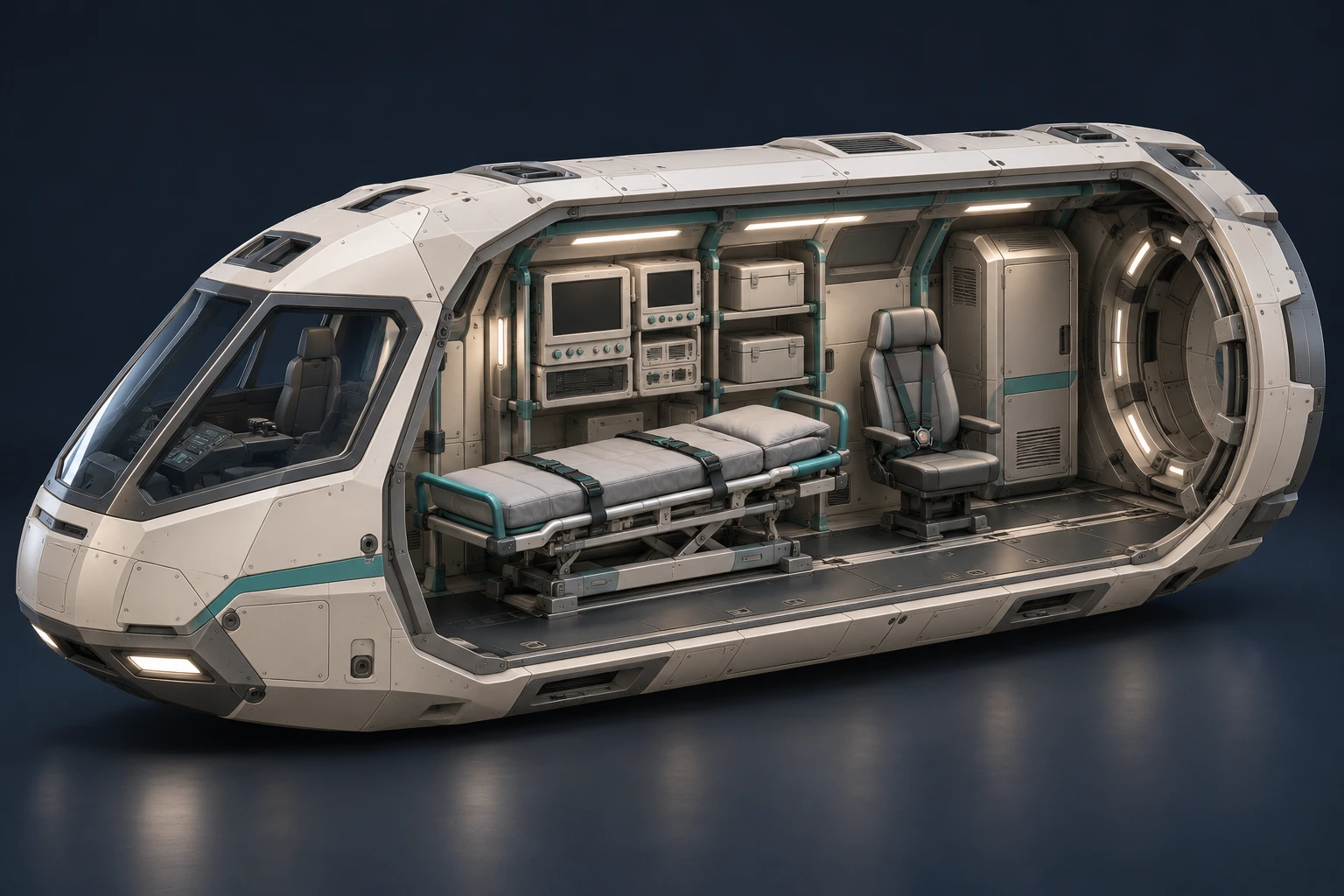
The wingless family includes a first-aid cabin arrangement with space for the patient, attendant and equipment during microgravity transfers.
Open the compact first-aid cutawayFollow the proposed transfer from CORAC’s surface refuge through a first-aid shuttle to Zorak Sick Bay, where the medical team takes over and plans follow-up care.
The rescue rehearsal follows a surface crew through a common transfer cabin and checks the route, lander and receiving shuttle before the handover.
A rover moves the crew from the refuge to the recovery lander along the route selected in the rehearsal.
A shared rescue module is proposed for Lekor, Lomec or Larko. The rehearsal can select an alternate lander when one is unavailable.
The receiving Qi shuttle and its interface are checked before the proposed pressure-isolated transfer.
The designs study a protected transfer from a compatible dock to the receiving crew. The Compact Power Core architecture reserves support for medical equipment independently of the propulsion commands.
10.5 × 6.2 × 3.6 m
The wingless family includes a first-aid cabin arrangement with space for the patient, attendant and equipment during microgravity transfers.
Open the compact first-aid cutaway7.6 × 5.1 × 3.2 m
This shorter medical transfer study includes its own cabin layout. The berth, access clearances and equipment fit are items for a full-scale rehearsal.
The Zorak Sick Bay Integrated Architecture (ZSBIA-R1) proposes a protected route from shuttle reception to the medical team. The team receives the patient and the transfer record, then decides what care is needed.
Handover test. Check stretcher clearance, dock compatibility and essential service availability, then verify that the receiving team gets the transfer record.
Explore the protected power and cooling in Life SupportIn the Sick Bay concept, PATRIOT keeps a record of the crew’s health readings aboard the ship so the medical team can review them during handover and follow-up.
During a Sick Bay visit, a medic measures a crew member’s body temperature.
PATRIOT adds the temperature and the time it was taken to the crew member’s record.
At follow-up, the medical team can compare the earlier reading with a newer one.
The Zorak Sick Bay Operations Doctrine (ZSB-OPS-R1) outlines what happens after handover. The medical team assesses whether the patient needs continued recovery, isolation, rehabilitation or transfer. The team clears a return to duty when appropriate.
The ZENIT Medical Treatment Centre concept also includes a recovery ward and longer-term monitoring.
The portable concept combines reserve electricity, lighting and communications for teams working through an outage.
Explore the SafeSpot PackThe proposed medical wing brings equipment studies, training and simulation into a ground setting.
Explore the research facility